
Once thought to be a flaw in the system, new research suggests that CD4 T cells may actually hold the key to maintaining a properly functioning, age-appropriate immune system.
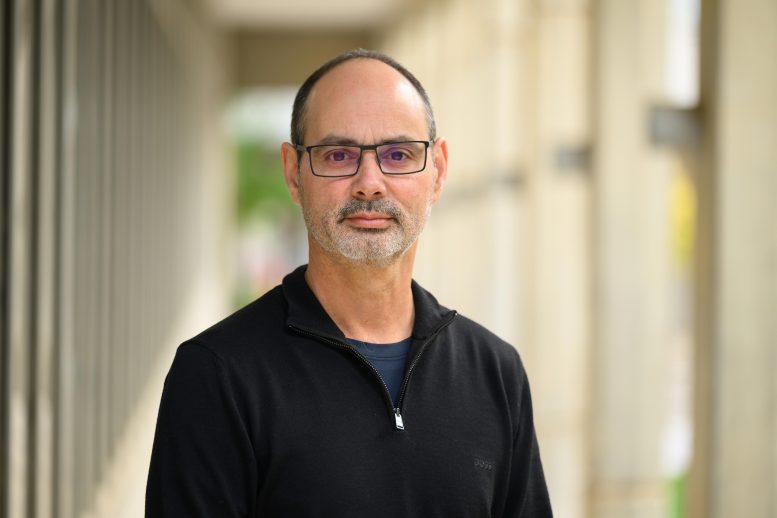
Prof. Alon Monsonego of Ben-Gurion University of the Negev has found that T helper lymphocytes, a type of immune cell responsible for coordinating immune responses, change in how they function as people grow older. These age-related changes can reveal a person’s biological age, which may not always match the number of years they have lived.
In collaboration with Prof. Esti Yeger-Lotem, Prof. Monsonego’s research group identified a previously unknown subset of T helper cells that builds up over time. The significance of these cells became clearer after a Japanese study of supercentenarians (people living well beyond 100 years) showed that this same type of T helper cell was abundant in their immune systems. Prof. Monsonego now suggests that these cells could be essential to keeping the immune system properly balanced throughout life.
The research, led by Dr. Yehezqel Elyahu from Prof. Monsonego’s lab in partnership with Prof. Valery Krizhanovsky of the Weizmann Institute of Science, was recently published in Nature Aging.
Cellular Senescence and Immune Defense
In the scientific world, aging is a process wherein cells fail to repair the normal wear and tear on them. As a result, people age. Specifically, senescence cells serve a physiological function when kept under proper regulation.
However, when they accumulate such as occurs with aging, they can cause inflammation and damage. A certain fraction of T helper cells that accumulate with aging, surprisingly, were found to have killing properties. So, these T helper cells act to clean out the system of senescent cells. In fact, Prof. Monsonego discovered that if they lowered the concentrations of these T helper cells in mice, the mice aged faster and lived for less time.
Interestingly, these unique and unexpected subset of T helper cells increase with age and play a prominent role in reducing aging.
If T helper cells change with age and are critical for the aging process, then, according to Prof. Monosonego and his team, we need to start tracking people in their 30s to assess the pace of aging as early as possible and follow the biological age of individuals so that early interventions help maintain their normal aging. A gap of decades can grow between biological and chronological ages.
“People say that to reverse aging and “rejuvenate”, we need to reset their immune system like the immune systems of people in their 20s. However, our research shows that this might not be the case. People don’t need a super-charged immune system; they need one that is working properly and appropriate for their stage in life. So, one of the “axioms” of how to reduce aging may be incorrect,” says Prof. Monsonego.
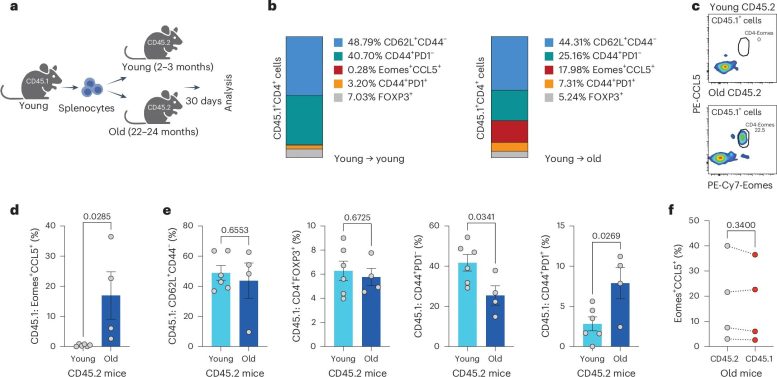
Furthermore, the cells that they discovered can be used for the diagnostic and therapeutic strategies associated with dysregulated aging, longevity, and age-related diseases.
Reference: “CD4 T cells acquire Eomesodermin to modulate cellular senescence and aging” by Yehezqel Elyahu, Ilana Feygin, Ekaterina Eremenko, Noa Pinkas, Alon Zemer, Amit Shicht, Omer Berner, Roni Avigdory-Meiri, Anna Nemirovsky, Keren Reshef, Lior Roitman, Valery Krizhanovsky and Alon Monsonego, 7 October 2025, Nature Aging.
DOI: 10.1038/s43587-025-00953-8
The research was supported by the Israel Ministry of Science and Technology (Grant no. 3-16148) and the Litwin and Gural Foundations.
Never miss a breakthrough: Join the SciTechDaily newsletter.
Follow us on Google, Discover, and News.
link
About the Author