




With chronic kidney disease (CKD), kidneys become damaged and over time may not clean the blood as well as healthy kidneys. If kidneys don’t work well, toxic waste and extra fluid accumulate in the body. This may lead to high blood pressure, heart disease, stroke, and early death. However, people with CKD and people at risk for CKD can take steps to protect their kidneys with the help of their health care providers. This report provides national estimates of chronic kidney disease, updated in March 2026.

Findings
Fast stats†
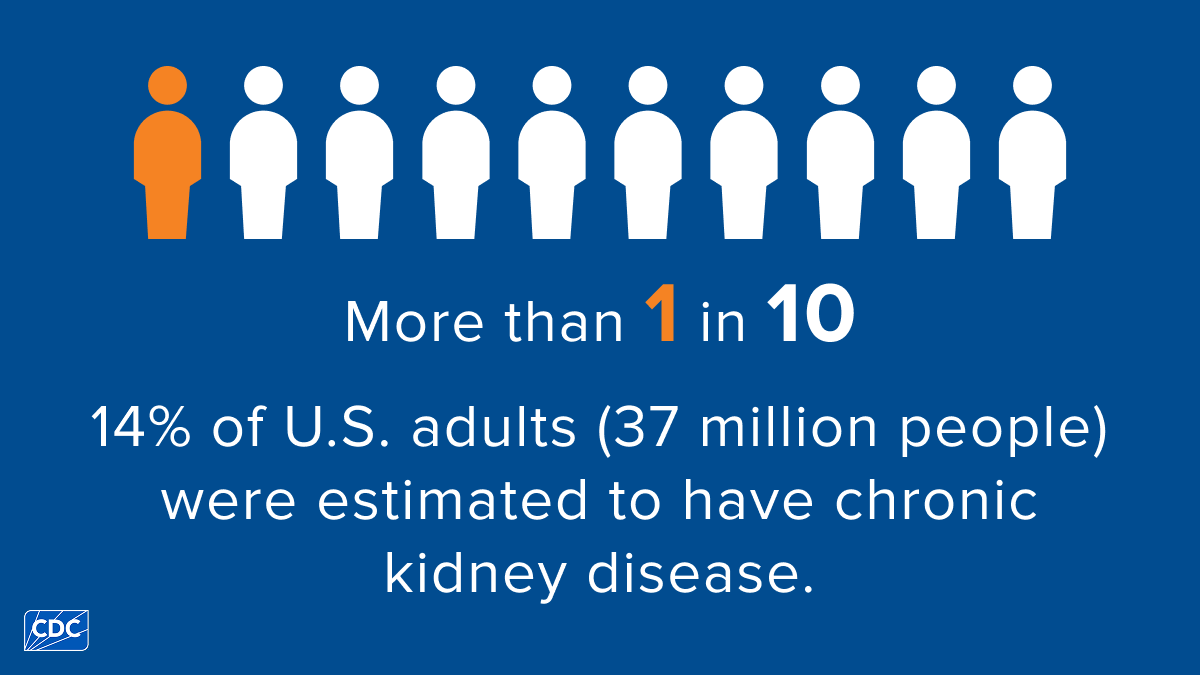
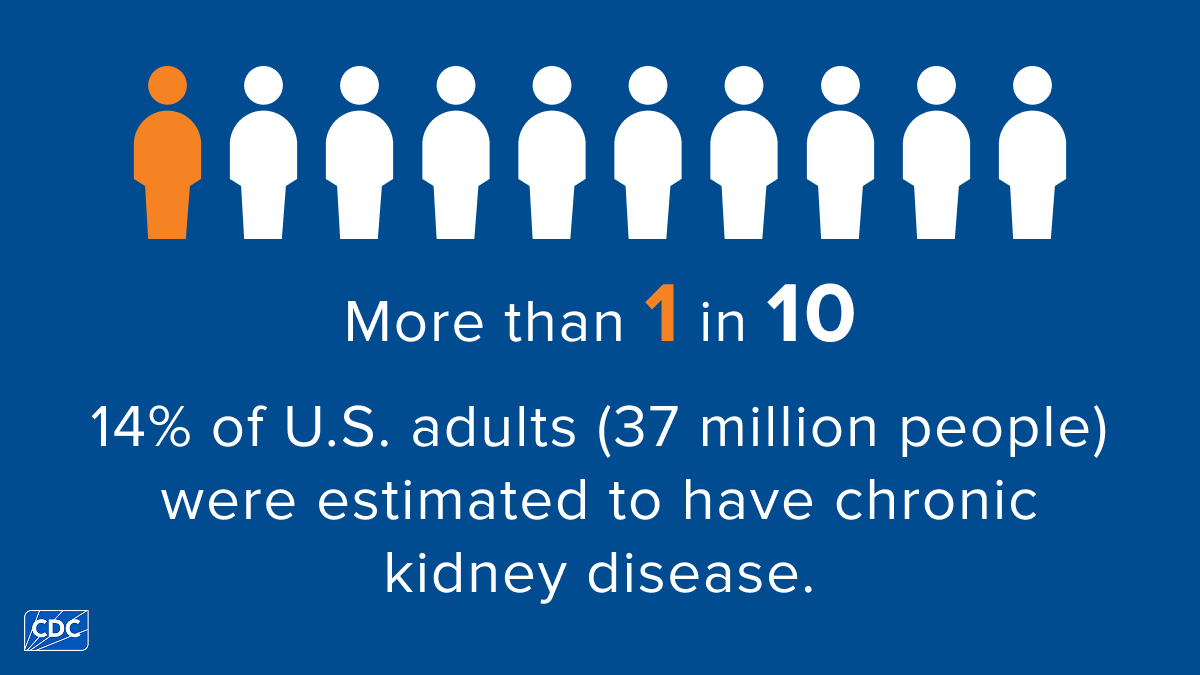
- More than 1 in 10 (14%) adults aged 18 or older (37 million people) were estimated to have CKD. Download image
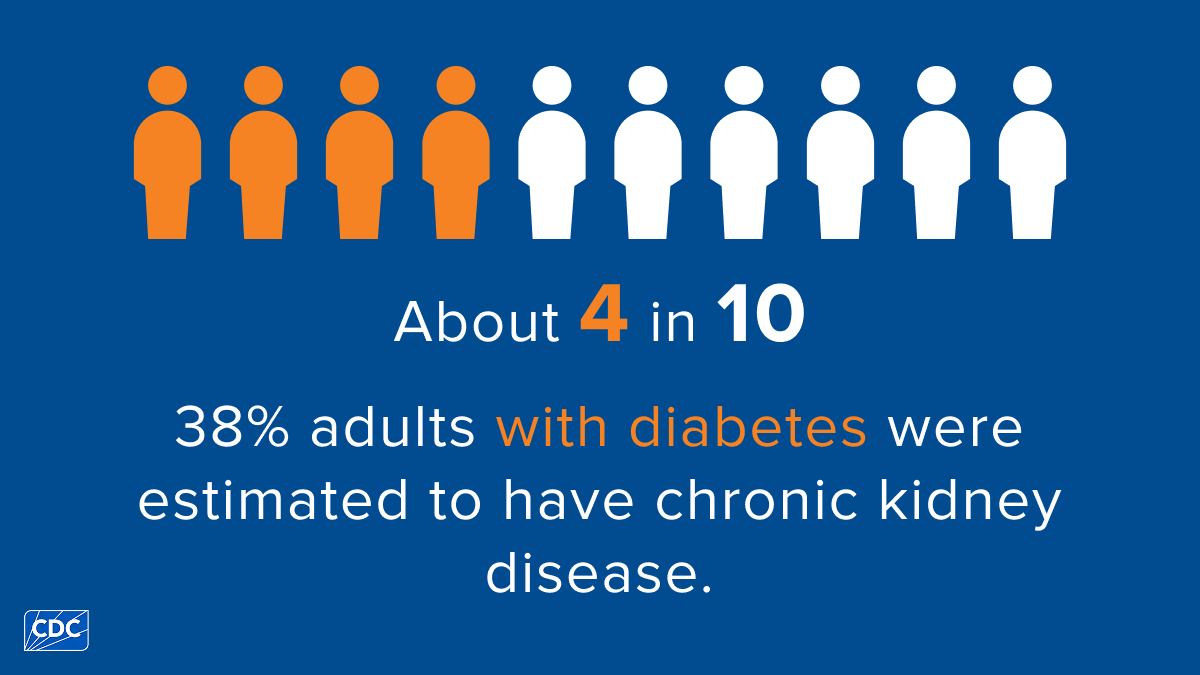
- About 4 in 10 (38%) adults aged 18 or older with diabetes (diagnosed or undiagnosed) were estimated to have CKD. Download image
- About 5 in 10 (49%) adults aged 18 or older with type 1 diabetes were estimated to have CKD. Download image
- More than 4 in 10 (41%) adults aged 18 or older with type 2 diabetes were estimated to have CKD. Download image
- More than 1 in 10 (11%) adults aged 18 or older with prediabetes were estimated to have CKD. Download image
- More than 2 in 10 (21%) adults aged 18 or older with high blood pressure were estimated to have CKD. Download image
- About 9 in 10 (87%) adults aged 20 or older with CKD did not know they have CKD. Download image
CKD by age, sex, and race-ethnicity
According to current estimates:†
- CKD was more common in people aged 65 years or older (34%) than in people aged 45–64 years (13%) or 18–44 years (6%).
- CKD was more common in non-Hispanic Black adults (22%) than in non-Hispanic White adults (13%) or Hispanic adults (12%).
Percentage of US Adults Aged 18 Years and Older With CKD,* by Age, Sex, and Race-Ethnicity
†How estimates were calculated for this page and full report
Percentage of CKD stages 1–4 among U.S. adults aged 18 years and older using data from the August 2021–August 2023 National Health and Nutrition Examination Survey (NHANES) and the CKD Epidemiology Collaboration (CKD-EPI) equation without race. CKD stage 5 (that is, kidney failure) was not included due to the small sample size. The estimates were based on a single measure of urinary albumin-to-creatinine ratio and serum creatinine; they do not account for persistence of albuminuria or elevated creatinine as indicated by the Kidney Disease Improving Global Outcomes recommendations. Thus, CKD in this report might be overestimated. Data on awareness were only available for individuals aged 20 years or older. Estimates by sex and race-ethnicity were age standardized using the 2023 U.S. population (Vintage July 2023); the overall percentage is not age-standardized. To estimate the number of adults with CKD, the age, sex, race-ethnicity subgroup-specific weighted percentages from three-way cross-tabulations were applied to the corresponding 2023 U.S. population (Vintage July 2023). The subgroup-specific numbers were summed to obtain the estimated number of adults with CKD. High blood pressure was defined by self-reported current use of prescription medicine for high blood pressure or measured blood pressure ≥130/80 mmHg. Diabetes (diagnosed or undiagnosed) was defined as either self-reported diabetes (i.e., having been told by a doctor or health professional that they had diabetes; hereafter referred to as diagnosed diabetes) or meeting laboratory criteria for diabetes (undiagnosed diabetes), defined as fasting plasma glucose ≥126 mg/dL or A1C level ≥6.5%. Prediabetes was defined as fasting plasma glucose values of 100 to 125 mg/dL or A1C values of 5.7% to 6.4%. Among adults with diagnosed diabetes, type 1 diabetes was defined as current insulin use with initiation of insulin therapy within 1 year of when first told they had diabetes. Type 2 diabetes was defined as diagnosed diabetes not meeting the criteria for type 1 diabetes. People with missing data needed to define CKD stage were excluded. For analyses using NHANES data, appropriate sampling weights were used so that estimates were representative of the total U.S. adult population.
Suggested citation
Centers for Disease Control and Prevention. Chronic Kidney Disease in the United States. Atlanta, GA: U.S. Department of Health and Human Services, Centers for Disease Control and Prevention; 2026.
Content Source:
National Center for Chronic Disease Prevention and Health Promotion (NCCDPHP)
link