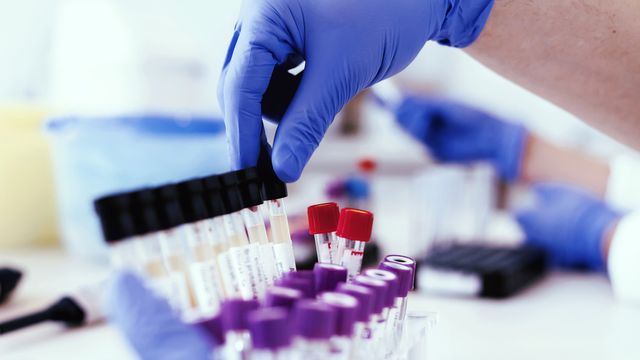
A biomarker is any parameter that can be measured to assess a biological process. While simple in concept, the potential and current uses of biomarkers are extensive. From risk indicators for disease development to predictors of treatment outcomes and endpoints in clinical studies, biomarkers play important roles in almost every aspect of biological research and clinical healthcare. In the context of the immune system, biomarkers indicate immune function and can include cytokines and chemokines, immune cells and their surface proteins, immune activation markers, enzymes and antibodies.1
Accessing, monitoring and applying biomarkers to the full extent of their potential, however, is more challenging. In theory, they are ideally positioned for serial monitoring, making them a key factor in the development of personalized medicine. They can help predict disease risk, guide treatment choices and monitor disease progression. However, there are still limitations and challenges associated with biomarkers, including the highly complex, heterogeneic nature of the immune system, the need for potentially invasive sampling and the need for validation of any potential biomarkers.
Although immune biomarkers for true personalized medicine may still be in their infancy, labs around the world are conducting extensive research to find consistent, accessible and reliable biomarkers for a wide range of diseases.
Biomarkers as identifiers of disease risk
Something that must be considered when using immune biomarkers is the difference between broad markers of inflammation and immune activation, compared to markers associated with specific disease processes and mechanisms. “We can look at blood or serum markers that would indicate inflammation, but there’s a lot of nuance between the different diseases that we’ve looked at,” explains Dr. Paul Austin, associate professor in the Brain and Mind Centre at the University of Sydney. His work focuses on investigating disease mechanisms and identifying biomarkers for chronic pain, such as neuropathic pain or migraine, and neurodegeneration, such as Parkinson’s disease. “The presence of broad biomarkers might not be able to diagnose a particular type of pain, but they can be indicative of an inflammatory disease process,” he says.
One aspect of Austin’s work involves analyzing large datasets, such as the UK Biobank, in order to identify immune biomarkers that can predict the onset of disease and help improve early diagnosis. Machine learning models are used to generate hierarchical lists of the most important data points within the dataset, which can then be analyzed. One particular study looked specifically at people in the biobank with diabetes, to assess risk factors for the development of diabetic neuropathy and associated chronic neuropathic pain.2
Austin’s group showed that even before symptoms of diabetic neuropathy occur, general markers of inflammation such as C-reactive protein (CRP) and the neutrophil-to-lymphocyte ratio (NLR) are increased. “Diabetic neuropathy is caused by advanced glycation end products that damage nerve fibers as a consequence of high blood sugar, causing an inflammatory response, but the pain only occurs after prolonged damage to the nerves,” explains Austin. “This makes CRP and NLR leading indicators of diabetic neuropathy development.”
However, identifying risk factors alone isn’t always enough. “There’s a disparity between what might be a widespread biomarker and the information we can get from individual immunophenotyping, which can give a much clearer picture of disease processes,” explains Austin. “When we’ve done more nuanced, detailed immunophenotyping of individual patients, we see much more subtle changes in different subsets of monocytes and T cells.”
Austin hopes that while more general biomarkers, such as CRP and NLR, can help to identify risk of diabetic neuropathy and chronic neuropathic pain up front, more detailed immunological studies can help understand the disease processes and provide therapeutic targets. “We’re tackling it at the big, population level changes, but also on the detailed individual level,” he says.
Predicting prognosis and treatment outcomes
Identifying risk factors for disease development is only one facet of the potential of immune biomarkers. For patients already affected by disease, immune biomarkers could help determine why certain treatments work for some people and not for others, guide treatment strategies and predict outcomes. For Dr. Santiago Zelenay, senior group leader at the Cancer Research UK (CRUK) Manchester Institute, this means understanding how different tumor inflammatory profiles can impact treatment outcomes. “All tumors are inflamed entities,” explains Zelenay, “but that inflammation comes in different flavors.”
In some cases, inflammation of the tumor environment is associated with better responses to immunotherapies such as immune checkpoint inhibitors (ICIs). In other cases, inflammation is associated with treatment resistance and increased chance of metastasis.3 “We’re trying to understand the key signaling pathways and the key cell types that regulate the type of inflammatory response in cancer, and determine how we can use this information to predict patient responses to immunotherapy,” he says.
Part of Zelenay’s work focuses on cyclooxygenase-2 (COX-2) as an immune biomarker. COX-2 is an inducible enzyme involved in the formation of lipid signaling molecules, such as prostaglandin E2, which contributes to regulating pain, fever and inflammation. COX-2 is overexpressed in many types of cancer in the tumor microenvironment.4 “What we’ve found is that COX-2 can inhibit the function of multiple types of immune cells, and that, in doing so, it drives tumor immune escape,” explains Zelenay. Zelenay’s group looked at the molecular profile of tumors with high or low levels of COX-2 and developed the pro-tumorigenic inflammatory gene signature (PTI) as a means for predicting patient prognosis.5 “We’re very excited about this, as it appears that the COX-2 PTI can predict whether a patient with lung cancer will relapse or not following surgery,” Zelenay says. “This could then inform whether a patient needs adjuvant treatment in addition to surgery and a more intense follow up to try and prevent relapse.”
This is one of the aims that Zelenay’s group, in collaboration with the CRUK National Biomarker Centre, is currently working towards, using a range of techniques, including proteomics, transcriptomics and computational analysis. “I think that the best biomarkers will be discovered by combining different methods,” he states. “But currently our most advanced assay involves monitoring the COX-2 PTI by molecular profiling using the most commonly available type of tumor sample: formalin-fixed paraffin-embedded. The objective is to use a method that can be easily implemented in the clinic to support accurate outcome prediction and guide treatment selection.
Challenges, limitations and the ideal biomarker
As both risk indicators and prognosis predictors, biomarkers show enormous potential, but there are still multiple challenges involved in identifying the most useful biomarkers. “One of the dangers of biomarkers is that you interpret correlation as causation,” warns Austin. “Any changes in biomarkers need to be validated to confirm that they are actually causative factors in the disease process.”
Even if biomarkers are validated, it doesn’t necessarily mean they will be consistently expressed across all patients, or even within one patient. The immune system is extremely complex and heterogeneic, as are many of the diseases being investigated. In addition, many immune biomarkers are dynamic and inducible, changing throughout the disease timeline.
One such example is programmed death-ligand 1 (PD-L1), a common target of ICIs. “At the moment we’re using PD-L1 expression in the tumor as a part of the decision as to whether or not the patient should receive an anti-PD-L1 ICI,” says Zelenay. “But there are plenty of examples of tumors that do not show PD-L1 expression, yet still benefit from targeting the pathway, and vice versa. We don’t currently have a biomarker good enough to make conclusive treatment decisions without missing patients that could benefit.”
As we discover and validate better biomarkers, we also need to develop easier, less invasive ways of monitoring them over time. “Many current immune biomarkers are only predictive of response or outcome if measured in tumor samples,” continues Zelenay. “These are not always available and can be quite invasive to obtain, especially if longitudinal samples are needed, before and after treatment.”
So, what would the ideal biomarker look like? In both oncology and neurology, the answer is the same. “Ideal biomarkers would be those that can be detected in easier to obtain liquid biopsies – blood, urine, saliva or even tears,” says Zelenay. Austin echoes this same sentiment for risk identification biomarkers: “Ideally, we would get to the point where we could take a simple, cheap blood test, use a very robust, detailed panel of markers to predict risk for a range of diseases,” says Austin, “then, you could introduce specific protective agents or lifestyle changes that could reduce the chance of developing that disease.”
Ultimately, there are still a lot of questions to be answered before immune biomarkers can become an everyday part of personalized medicine or population-level risk identification. “There is a huge emphasis on translational research,” says Zelenay, “but in order to translate something, you must first understand the language.” Fundamental immunology research is still needed to help answer the big questions surrounding biomarkers – for example, how inflammation can be both beneficial and detrimental in the tumor microenvironment. Austin agrees: “There’s emerging research suggesting that acute inflammation could be a restorative process in chronic back pain.6 In terms of therapeutics, it’s essential that we understand the fundamentals, so that we don’t potentially inhibit something important.”
In spite of the questions still to be answered, there is no doubt that immune biomarkers have enormous potential to improve patient care and reduce disease risk. With current research, this potential could be realized in the near future.
link
About the Author