[MUSIC PLAYING]
EMILY KWONG: You’re listening to Short Wave from NPR. David Ewing Duncan describes himself as “the experimental man.”
[MUSIC PLAYING]
DAVID EWING DUNCAN: 25 years ago, I was one of the first humans to have my DNA sequenced for a story for Wired magazine.
BERLY MCCOY: David is a journalist and a science writer.
DUNCAN: And we almost didn’t do the story. It seemed a bit gimmicky. But we did it, and it really resonated with people. And so I was kind of off and running.
KWONG: And he has made a career out of this, out of signing up for tests promising new insights into health and mortality. After sequencing his genome, he later tested his proteome, the protein circulating in his blood, then his microbiome, then his metabolome.
DUNCAN: And I’ve got about– I don’t know– at the last count, about 70 terabytes of data on myself, which is–
KWONG: Whoa!
DUNCAN: –an extraordinary amount of data. A lot of that is I got a lot of MRI scans. So that eats up a lot of bytes.
KWONG: It is really a twist on the line in Hamlet, “Know thyself.”
DUNCAN: Yes.
KWONG: But in all these terabytes of data–
DUNCAN: Maybe 98% was not useful. But the 2%, this man, John Tsang, is largely responsible for.
KWONG: John Tsang is a professor of immunology at Yale University. And he and his colleagues have devised a test to measure immune health. They call it the immune-health metric. And when David, the experimental man, heard about it, he said, sign me up.
DUNCAN: I’ve had long-haul COVID twice. I’ve had a couple of surgeries. Like, what is my immune-system health?
KWONG: Otherwise known as the immunome, made up of many genes and proteins.
DUNCAN: It’s probably the most important system in our bodies. It literally decides if we’re going to be able to heal ourselves when we get an infection or a disease. It’s health, or our lack of health, is, you know, different than our actual biological age.
KWONG: And, as John reminded me, there’s roughly 1.8 trillion of these little immune cells hanging out in your body right now, seeing what’s good.
JOHN TSANG: And many of them are residing in different organs and tissues. Many of them also move around your entire body. They patrol, and they try to check out different tissues and organs. And then they see what’s going on.
KWONG: To respond by, say, running up your body temperature to fight a cold, or turn your system to homeostasis, and to remember those threats for next time.
TSANG: It has to remember, have I seen the flu? Have I seen the COVID? Or have I seen a lot of inflammatory signals? So now, in my next response, I may want to anticipate what’s coming in.
KWONG: John’s test, the immune-health metric, requires a blood sample. So David gave his blood, and after a ton of fancy calculations, got his score, this snapshot of his immune health. He was nervous about he’d fare. And then he got the text from John.
DUNCAN: So my score was 0.35.
KWONG: And how did you feel about that?
DUNCAN: I honestly didn’t know what to make of it. It– you know, it’s just a random number. And I had to get a lot of explanation before I really understood what that score meant.
[MUSIC PLAYING]
KWONG: Today on the show, the future of immune health may be here now. Can extremely personalized medicine unlock the secrets of how healthy you are and how long you may live? Plus, what David’s score means. I’m Emily Kwong. You’re listening to Short Wave, the science podcast from NPR.
KWONG: All right, John and David, I want to start by talking about how doctors have historically assessed people’s immune health in the past. Like, how was immune health measured, John?
TSANG: They actually don’t have a very good way to summarize overall, how’s your immune health? All we got typically, if your doctor orders it, it’s what’s called a CBC. It’s a Complete Blood Cell Count.
KWONG: Complete Blood Cell Count. I know the CBC is the Canadian Broadcasting Corporation.
[LAUGHTER]
TSANG: That’s right. I’m Canadian.
KWONG: Oh, nice. Nice.
TSANG: So the complete blood count, it provides you with the absolute count and frequency of certain cells in your blood. That’s nothing very specific you can basically tell by just looking at those numbers. But how to link the CBC to the health of your immune system and how to link the CBC to other aspects of your health, it’s still an open problem.
KWONG: David, why is that test, the just simply counting, not enough?
DUNCAN: Well, the CBC just tells you there’s something going on in your body. I mean, you know, your body is incredibly complicated. And, you know, there’s some infection somewhere. So–
KWONG: Right.
DUNCAN: –it doesn’t tell you where it is. It doesn’t tell you what it is.
KWONG: And so the Complete Blood Count, the CBC, that has been the standard, more or less, for assessing people’s immune health for decades. But now, John, your lab has developed a new test, the immune-health metric. How did you make this test?
TSANG: In our case, we started with both clinically healthy people, so no obvious disease, and then also various groups of people suffering from various genetic defects. Each one of these person is, like, suffering from a natural perturbation, or it’s like a hammer knocking stuff around, right, in their system. If we look at enough of these people where the hammer is knocking on different points in the immune system, we can build a map on how different parts of the immune system is connected to each other–
KWONG: Whoa.
TSANG: –number one, right? And number two, we can start to ask the question, despite that these diseases originated from different parts of the immune system being perturbed, are there common deviations? And we call that common deviation from health.
KWONG: It’s like knowing the immune system on a far deeper, holistic level than merely, like, it exists.
TSANG: Correct.
DUNCAN: Yeah. Right now, medicine is still practiced organ by organ, system by system. And we’ve been tending towards this idea that, actually, we do have a system that’s connected together. And we now really have, through John’s work and others, a way to show how the body really is working as a holistic unit. And the immune system is key to that.
KWONG: John, you also used AI to develop the test? How so?
TSANG: Where the AI came in is very intriguing. We thought, well, now let’s represent each person just as a string– long string of numbers. You now have a map, that– you can place each person on that map, right? If you take the very first dimension that explains the most amounts of differences across all of these people that we have looked at, correlated almost perfectly with this probability of someone being healthier, AI was rediscovering, in a way, our probability of being healthy axes. And that’s super intriguing because it suggests that that’s the most fundamental wavelength, in a way, in the system. And once the AI is done, we can go back and ask, what did you use in order to compute this probability? That’s how we figured out how some of the underlying parameters are contributing.
KWONG: Gotcha. What are the limitations of that method? Just because everyone’s bodies are so different, and you have sampled hundreds of people, but not millions or billions of people on the planet, what additional data do you wish you had to make your predictive models better?
TSANG: Actually, that’s where we’re moving next right now. It’s called the Human Immunome Project. The idea is, we want to measure the entire world’s immune system to increase representation of individuals with very different genetic backgrounds, very different exposure histories, facing very different kinds of stresses, and so on, right? So that would help us to train these models to better represent all of the individuals on Earth in terms of their immune system.
KWONG: In the pursuit of gathering more data– and I read in David’s article, the plan is to send immune monitoring kits all over the world– are there going to be any kinds of, like, data-privacy safeguards? Because we’ve seen so many health efforts in which people’s data is then, like, sold to companies. So is that part of at all with the Human Immunome Project?
TSANG: No, that’s not part of the plan at all. Our mission is to make this openly available for researchers and anyone around the whole world. And second, we will be working with all the local scientists and jurisdictions about data privacy and everything, and in the sense that, of course, we want to protect the privacy of the participants. So the goal is not to take this data and sell the data to any specific entity or use it to benefit only a specific entity.
KWONG: OK, I want to go back to David’s score, your immune-health metric. Now, this was the score that was from the time of sampling. It’s not, like, your forever score. It was 0.35. And you were told what about it?
DUNCAN: Well, I was placed with a group of people about 20 years younger than me, meaning that my immune system seems to be about 20 years younger than my actual biological age.
KWONG: Nice.
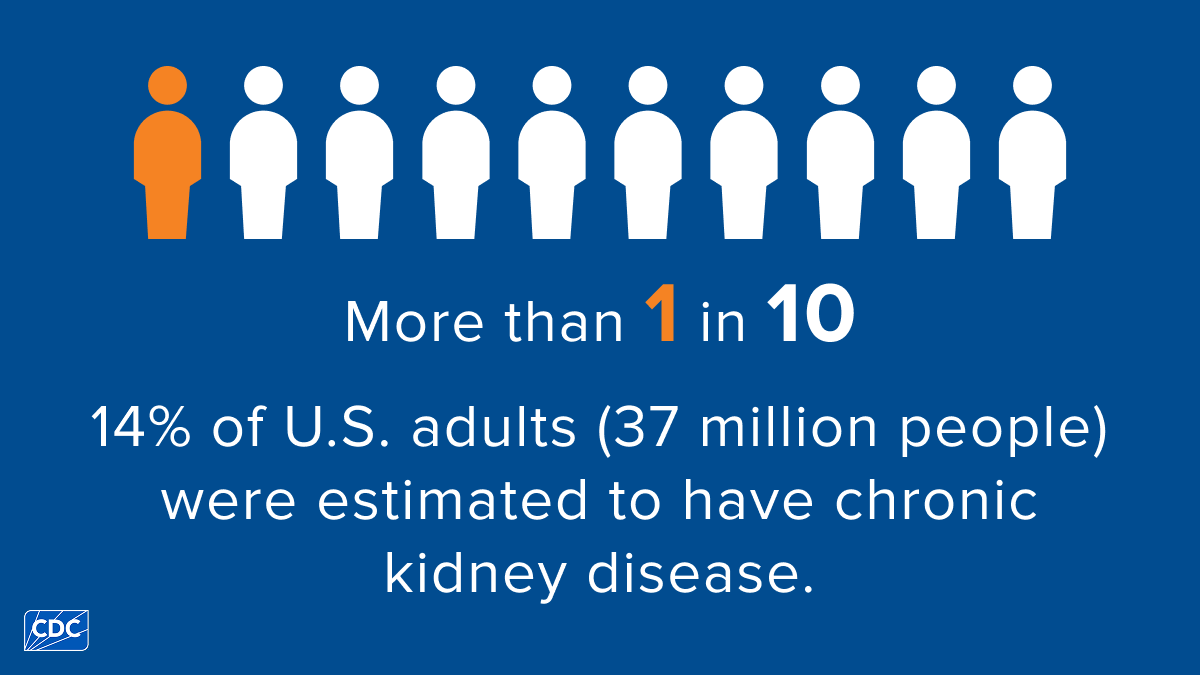
DUNCAN: And the interesting thing about that is, I do have other tests I’m taking right now that are telling me, in various ways, I am not that healthy, say, you know, in my kidneys and a couple of other places. But the question is, does that– does the health of my immune system override that?
KWONG: Yeah.
DUNCAN: So I’m on a quest here to find out, what does all this mean, you know, for one person? And it’s not really that it’s all about me, although I’m interested in my own results. It’s really, I’m being able to play the role of the guinea pig, the human guinea pig here. And these are all questions that I think, you know, will be teased out over the next few years. And this is the first time, in all of my testing for 25 years, that I’ve actually had a study that begins to tell me what’s going on in a holistic way in my underlying health.
KWONG: Yeah, you write, “Spotting a low immune-health metric in a seemingly healthy person could make it possible to identify and start treating an illness before symptoms appear, diseases worsen, or tumors grow and metastasize.” And you write about a world in which maybe John’s test, tests like it, the numbers could be available on, like, an app, if people are regularly sampling. I mean, what impact could this have on medicine?
TSANG: Yeah. Imagine a world where you could monitor how things are going in body. And when there are signs that your body is going in the wrong direction, you can start to ask the question, can I modulate my immune system in particular? On the other end of the spectrum, there are rare disease patients. After years of bouncing around–
KWONG: Yeah.
TSANG: –different medical specialties, they’re undiagnosed, still undiagnosed. We can now pinpoint what’s going on, what this immune system sensed. And now, can we move this person back to health?
DUNCAN: One of the major findings of John’s work and others is a kind of paradigm shift.
[MUSIC PLAYING]
DUNCAN: And it’s really– I mean, I don’t use this word ever, you know, because I’m a skeptical health journalist. But, you know, this is somewhat revolutionary that we’re moving into this phase where I think it will shift medicine around. You know, why do some people get COVID? Why do some people not? Why do some people get allergies? Why do some people not? That clearly has to do with your immune system. And probably, your immune system may be more important than the actual severity of these threats.
KWONG: To learn more about the Human Immunome Project or to read David’s full article about this in MIT Technology Review, check out our show notes. John Tsang and David Ewing Duncan, thank you so much for coming on Short Wave.
DUNCAN: Thank you.
TSANG: Thank you very much.
KWONG: This episode was produced by Berly McCoy. It was edited by our showrunner, Rebecca Ramirez, and fact-checked by Tyler Jones. Robert Rodriguez was the audio engineer. I’m Emily Kwong. Thank you for listening to Short Wave from NPR.
Copyright © 2025 NPR. All rights reserved. Visit our website terms of use and permissions pages at www.npr.org for further information.
Accuracy and availability of NPR transcripts may vary. Transcript text may be revised to correct errors or match updates to audio. Audio on npr.org may be edited after its original broadcast or publication. The authoritative record of NPR’s programming is the audio record.
link