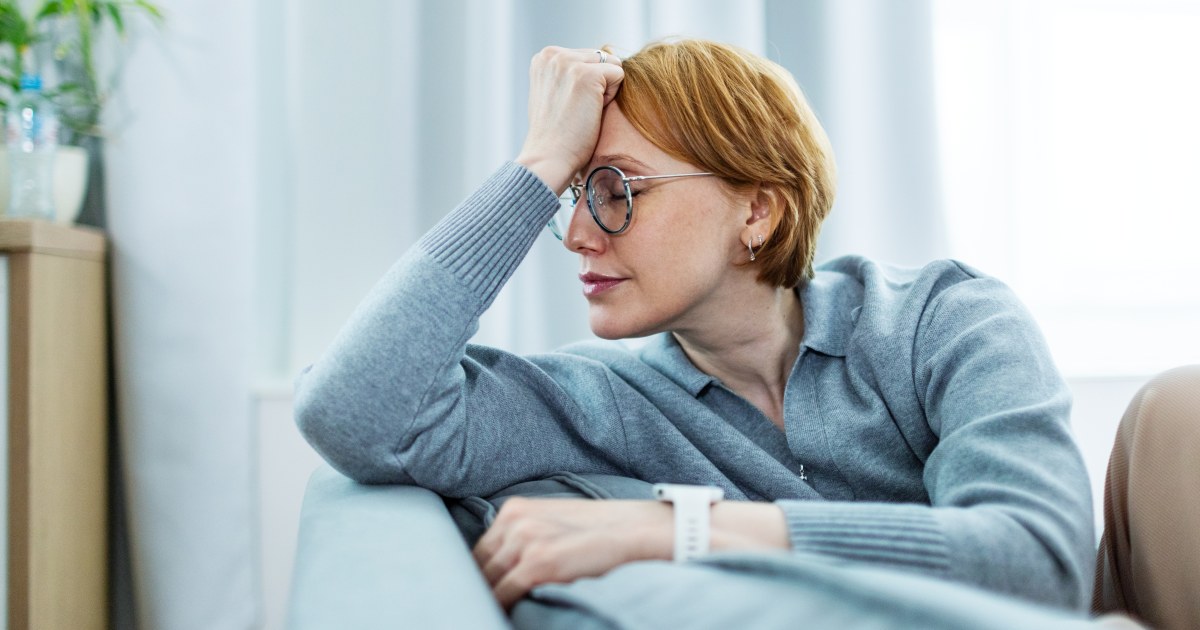
Menopause symptoms can take a toll on a woman’s health in unexpected ways.
The impact goes beyond hot flashes — the symptom probably most associated with the transition.
But when doctors asked thousands of women about their experience, other problems were considered to be much more severe.
The findings, published in November 2025, were “eye-opening,” says Dr. Ekta Kapoor, one of the authors, and an endocrinologist and menopause specialist at the Mayo Clinic in Rochester, Minnesota.
“Historically, hot flashes and night sweats are thought to be the most common and the most bothersome symptom of menopause,” Kapoor tells TODAY.com.
“(But) in our survey, sleep disturbances really top the list.”
Most women begin the menopausal transition when they’re between 45 and 55 years old, according to the National Institute on Aging.
But some can experience symptoms as early as their 30s and may not recognize the changes that are happening, assuming they’re too young, researchers reported earlier in 2025.
Menopause symptoms are “still vastly under-treated,” adds Dr. Stephanie Faubion, study co-author and director of the Center for Women’s Health at the Mayo Clinic.
Still, there’s more public discussion about menopause now, with women seeking solutions for their symptoms, Faubion notes.
“It’s the Gen Xers and the first millennials are now in this age group and they’re not willing to suffer in silence. They are out there. They’re going to talk about their problems,” says Faubion, medical director for The North American Menopause Society.
The Mayo Clinic study found about one-third of women, 34%, have moderate, severe or very severe menopause symptoms.
Here are eight common menopause symptoms other than hot flashes and night sweats women should know:
Sleep Problems
Up to 70% of women going through menopause can experience sleep disturbances or poor-quality sleep, but may not realize there’s a connection, Kapoor says.
Sleep problems are one of the most common and yet lesser-known menopause symptoms, she adds. It was one of the most frequently reported “severe” or “very severe” symptoms in the survey.
Problems can mean trouble falling asleep, staying asleep or waking after sleep onset.
“We also develop primary sleep disorders during and after menopause. So restless leg syndrome, obstructive sleep apnea,” Faubion notes.
“We gain weight during this time. Our airways get floppier because we lose estrogen. All of those things increase the risk of sleep apnea.”
Night sweats and mood issues associated with menopause can disrupt sleep, too, she adds. Midlife also means women may have aging partners who snore, older children who are in and out of the house, elderly parents who are sick and stressful jobs — all of which can impact sleep.
Weight Gain
Menopause theoretically is not associated with a change on the scale, but rather a change in body composition due to the loss of estrogen, Faubion notes. It means women gain visceral fat, so their waistline gets bigger.
At the same time, both women and men gain weight in midlife because they lose muscle mass so they’re not burning as many calories, she adds.
“You get this nasty combination of getting more body fat, you’re losing muscle mass and you’re generally putting on weight,” Faubion says.
“Probably the weight and the mood are the ones that drive the women most crazy.”
Weight gain might happen because severe menopause symptoms such as sleep problems can interfere with lifestyle choices, Kapoor notes, perhaps leading to overeating or being too sedentary.
Weight gain was also one of the most frequently reported “severe” or “very severe” symptoms in the survey.
Could GLP-1 medications for weight loss offer a benefit during menopause, even if women don’t have obesity? That research needs to happen, Kapoor says.
Sexual Problems
The most common complaint women have is vaginal dryness that leads to discomfort during intimacy, Kapoor notes.
Many report low libido, which can be a complex issue, she adds. It could be driven by pain during sex or hormone changes due to menopause. Stress related to relationship conflicts, teenage children and elderly parents can also contribute.
Sexual problems were among the most frequently reported “severe” or “very severe” symptoms in the survey.
Physical and Mental Exhaustion
“A woman who is chronically sleep deprived is going to be physically and mentally exhausted,” Kapoor says.
“Simply the lack of estrogen itself for some women causes them to feel mentally not so sharp and feel a little exhausted.”
Mood disorders can drive fatigue as well.
Joint Pain
This symptom feels like achiness and stiffness everywhere in the body — as opposed to a specific joint with arthritis — and is “a little tricky” because the cause is still not completely understood, Kapoor notes.
Once again, chronic sleep disruption may be a factor, creating a sense of achiness and fatigue. There are also theories that the lack of estrogen can create that pain because there are estrogen receptors on joints.
“It’s very, very common after menopause, but many women do not recognize this as a symptom of menopause,” she says.
Depressed Mood, Anxiety and Irritability
Some women have a terrible time with mood during the menopause experience, Faubion says.
Mood is determined by estrogen, so women who are more sensitive to a drop in the hormone — often those who previously suffered from premenstrual symptoms or postpartum depression — are more prone to develop depressive disorders after menopause, Kapoor adds.
Bladder Problems
Women may feel an intense urge to go to the bathroom and experience leaks if they don’t make it in time. This is called urinary urgency and urge incontinence.
It’s caused by the lack of estrogen, which is vital for the health of the genital tissues, Kapoor says.
Estrogen loss can thin these tissues and weaken the muscles of the urethra, the opening of the bladder, the American College of Obstetricians & Gynecologists notes.
It’s also one of the reasons why post-menopausal women get frequent urinary tract infections, Kapoor adds.
Heart Discomfort
Some women complain of chest pain, “but the big one that we really see after menopause in terms of chest and heart symptoms is palpitations,” Kapoor says. “A lot of women will just complain of the sense of heart racing.”
How to Get Help
If any of these symptoms are interfering with your life, tell your doctor, the experts advise.
In the Mayo Clinic survey, almost 84% of the women didn’t seek care for menopause-related problems, which was “disappointing” and likely driven by fears surrounding hormone therapy, Kapoor says.
But many doctors say the benefits of hormone therapy outweigh the potential risks for most patients, NBC News reported. The U.S. Food and Drug Administration recently announced that, based on “the latest scientific evidence,” the medications will no longer carry a health warning.
Hormone therapy is the most effective treatment for menopause symptoms, the Mayo Clinic study notes.
“We want to liberalize the use of hormone therapy in the appropriate patients,” Kapoor says.
There are also two new, non-hormone menopause treatments: fezolinetant, sold under the brand name Veozah; and elinzanetant, available as Lynkuet — both for hot flashes.
link
About the Author