URBANA, Mo. (InvestigateTV) — Countertops made from engineered stone are found in kitchens and bathrooms across the country. Made of crushed quartz mixed with resins and polymers, they’re marketed as being better than marble or granite.
But some workers who cut and shape these stone slabs in small local fabrication shops are becoming deathly ill from a disease called silicosis.
Tyler Jordan, 31, lives in Missouri with his wife and three children. He used to work in his family’s stone fabrication shop in Colorado alongside his father, Jimmy.
“Trying to take a deep breath, there’s just a point where there’s no more,” Jordan said. “I feel like I should be able to breathe deeper, but I can’t, I can’t. It’s tight.”
Worker’s condition worsens
Jordan said he looked up to his father and planned to take over the family business someday. That changed in spring 2022 when he started having chest tightness followed by pain.
Doctors initially thought it might be cancer, but the diagnosis was something else.
“And then now, looking back, cancer would have been a better outcome,” Jordan said.
Jordan was diagnosed with silicosis, a life-threatening, incurable disease. Doctors told him it came from breathing silica dust while working in his family’s shop.
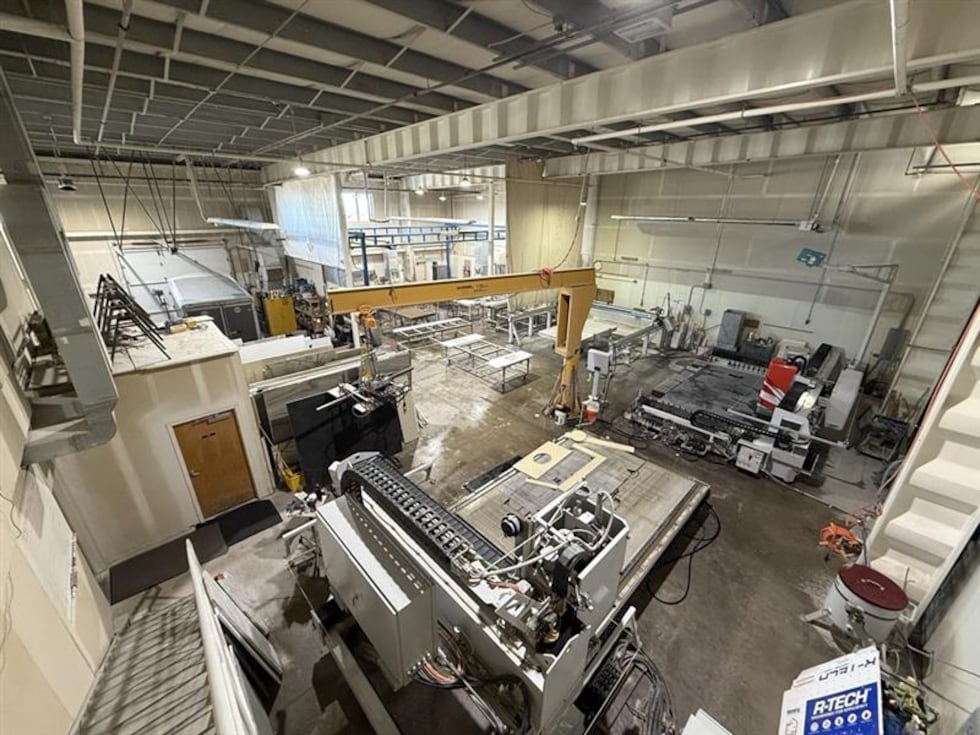
Silica is present in natural stones like marble and granite, but studies show engineered stone often contains far higher amounts — as high as 90%. Much of it exists in tiny, nano-sized particles that can lodge deep in the lungs.
Hundreds affected nationwide
State data in California shows more than 480 workers have been diagnosed with silicosis over the past seven years. Twenty-seven have died.
Dr. Jane Fazio of the UCLA School of Medicine treats many of these workers. She said the silica particles are extremely toxic to the lungs.
“So you’re not able to take in the amount of air that you really need to,” Fazio said. “So they really do become hard. They become essentially stone.”
The lungs of silicosis patients harden, then shrink and over time stop expanding.
“They’re suffocating to death,” Fazio said.
There is no cure. The only treatment for dying workers is often a risky double-lung transplant. California state data shows more than 50 workers have required transplants in recent years.
A 2023 study by Fazio and others found an estimated 100,000 stone fabricators in the U.S. are at potential risk for silicosis.
Industry disputes responsibility
Fazio said there’s a simple solution: ban engineered stone.
“The easy solution is to change, change the product. Ban the high silica material,” she said.
But Minnesota slab manufacturer Cambria disagrees. Micah Aberson, a company executive vice president and former president, said the responsibility lies with fabrication shops, not manufacturers.
“The ban will not solve the problem. It’s a process issue, not a product issue,” Aberson said. “Creating a safe work environment is a choice.”
Aberson said Cambria has prioritized safety for 25 years, including wet-cutting that uses water during fabrication to keep down dust.
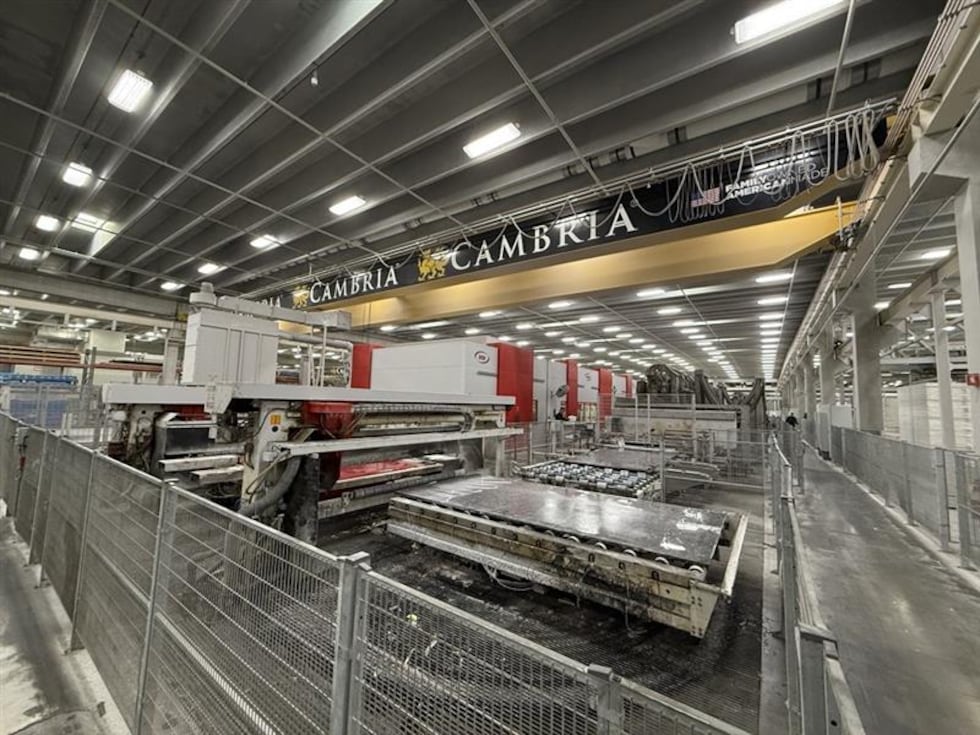
“And in those 25 years, we haven’t had a single reported case of silicosis, which would suggest to me and to all of your viewers that you can absolutely cut this product safely and we are cutting it safely,” Aberson said.
He said shops handling Cambria’s products should follow safety regulations and face tighter government enforcement.
“And if they can’t do it safely, then they need to be shut down,” Aberson said.
Cambria also runs an educational program it calls ‘Cambria University’ where it says fabricators can get free training on safety and design techniques.
Australia bans engineered stone
Australia banned engineered stone use in 2024, saying in a report “There is no scientific evidence for a ‘safe’ threshold of silica in the product’ and it “poses an unacceptable risk to workers.”
In December, the roughly 600 occupational health doctors in the Western Occupational and Environmental Medical Association (WOEMA) petitioned California authorities, urging a statewide ban. In a letter, WOEMA said “engineered stone…is too toxic to fabricate and install safely” and that “education and enforcement alone” won’t “curtail the escalating health emergency.”
The doctors’ letters cited more than 100 scientific articles detailing “the worldwide epidemic of silicosis caused by engineered stone.” When asked if he had read the studies, Aberson said he had not read all of them but that workers face risks from fabricating no matter what type of stone they are cutting and that the mandate to process stone safely extends beyond engineered stone to other stone products.
Legal battles and industry response
Jordan is suing Cambria and other stone and tool manufacturers. Aberson said he could not comment on active litigation. But in court filings, Cambria acknowledged Jordan’s silicosis but denied responsibility, saying it “provided adequate warnings” about its products.
Cambria blamed Jordan’s parents, saying they “failed to provide a safe workplace” for their son.
“That’s not true,” said Jimmy Jordan, Tyler’s father. “They don’t want the blame. So they’re going to put blame on us that we had a bad shop, that we had a dusty shop, that we were putting our employees in bad positions. But that’s not true.”
The industry is pushing a bill in the U.S. House of Representatives, H.R. 5437, that would prohibit all lawsuits from fabricators like Jordan, removing civil liability for manufacturers and sellers of engineered stone products. A representative for the bill’s sponsor, Rep. Tom McClintock, R-Calif., said his office had no further information in response to a request for comment from Rep. McClintock as to why he sponsored the bill.
Aberson confirmed Cambria supports the bill and is part of a coalition pursuing the legislation. Aberson said, “We’re trying to separate the penalty of what happens when laws are violated in the processing of these stone products away from manufacturers who have no control over it.” He said the coalition includes manufacturers, distributors, retailers and natural stone quarries along with the Natural Stone Institute and the National Kitchen & Bath Association.
Another major engineered stone countertop manufacturer, Caesarstone, told us the following about H.R. 5437:
“Caesarstone strongly supports this legislation as a necessary step to end the cynical ‘lawfare’ against manufacturers who have consistently provided proper safety education and warnings. The current litigation environment unfairly targets honest businesses while failing to hold accountable those businesses who deliberately prioritized profits over human life by ignoring established OSHA laws and safety mandates. The reality is that manufacturers have no oversight or control over the day-to-day operations of third-party fabrication shops, nor do they benefit from improper practices. Silicosis is a result of illegal work processes – not the product itself which is perfectly safe as is – and responsibility must rest with the parties who failed to protect their workers, rather than the suppliers of the raw material.”
Tyler Jordan opposes the bill.
“I think it’s a little bit ridiculous when a product is this dangerous to not have any repercussions about, you know, putting it out and getting people sick or essentially killing them,” Jordan said.
Father donates kidney to son
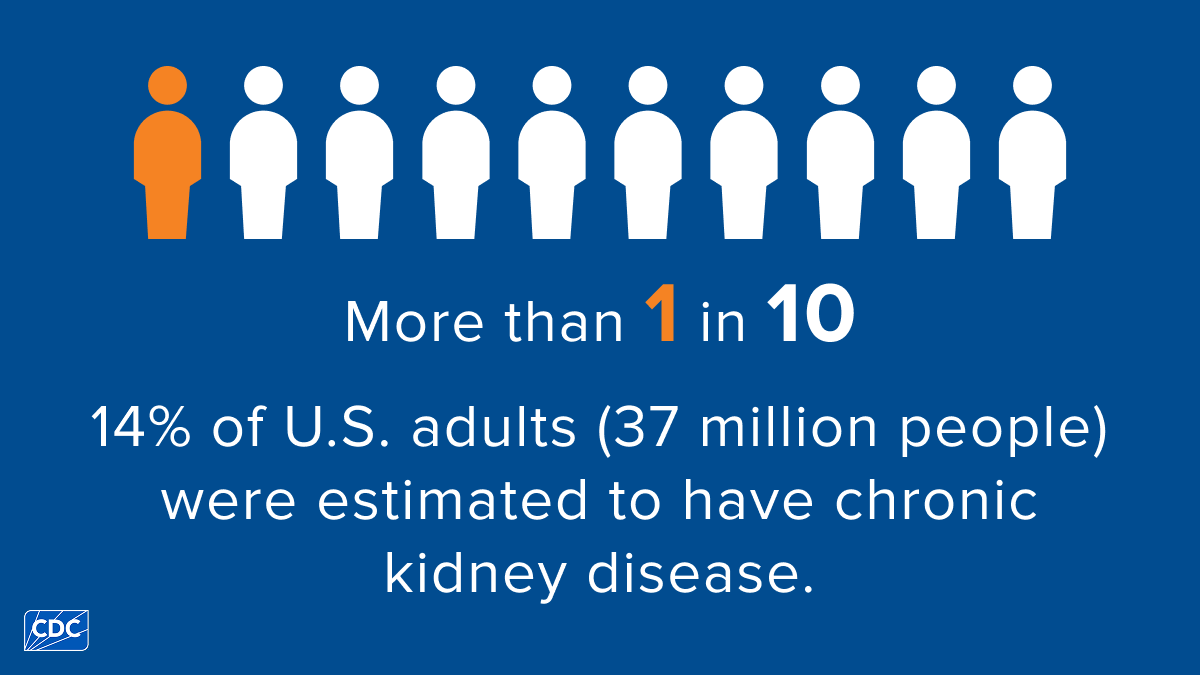
In 2024, Jordan’s condition worsened. Doctors told him his silica exposure had caused his kidneys to fail. His kidney function dropped to 9%.
In December, he was told he needed a transplant. His father donated a kidney.

“He saved you?” InvestigateTV asked.
“Yes,” Jordan said.
Jimmy Jordan became emotional discussing the donation.
“Yeah, kind of. But at the same time, I put him in that position,” he said. “Unknowingly.”
Jordan’s mother, Tina, said her son’s life plan changed in a moment.
“He just shouldn’t be sick. He should be playing out in the yard with his kids,” she said.
Jordan now takes medications to prevent transplant rejection. His lung function is at 60%. He said he can’t work and finds it hard to accept that his dream of taking over the family business is gone.
“Because that was my life plan. That’s what I wanted,” Jordan said. “I really don’t know. I don’t really have a plan anymore.”
Cal-OSHA’s Standards Board is considering the petition from the Western Occupational and Environmental Medical Association to ban engineered stone countertops in California. The International Surface Fabricators Association said it does not support a blanket ban and believes the petition’s conclusions do not fully reflect industry realities.
Some manufacturers are now making lower-silica engineered stone products, and alternatives are available in Australia.
Copyright 2026 Gray Media Group, Inc. All Rights Reserved.
link
About the Author